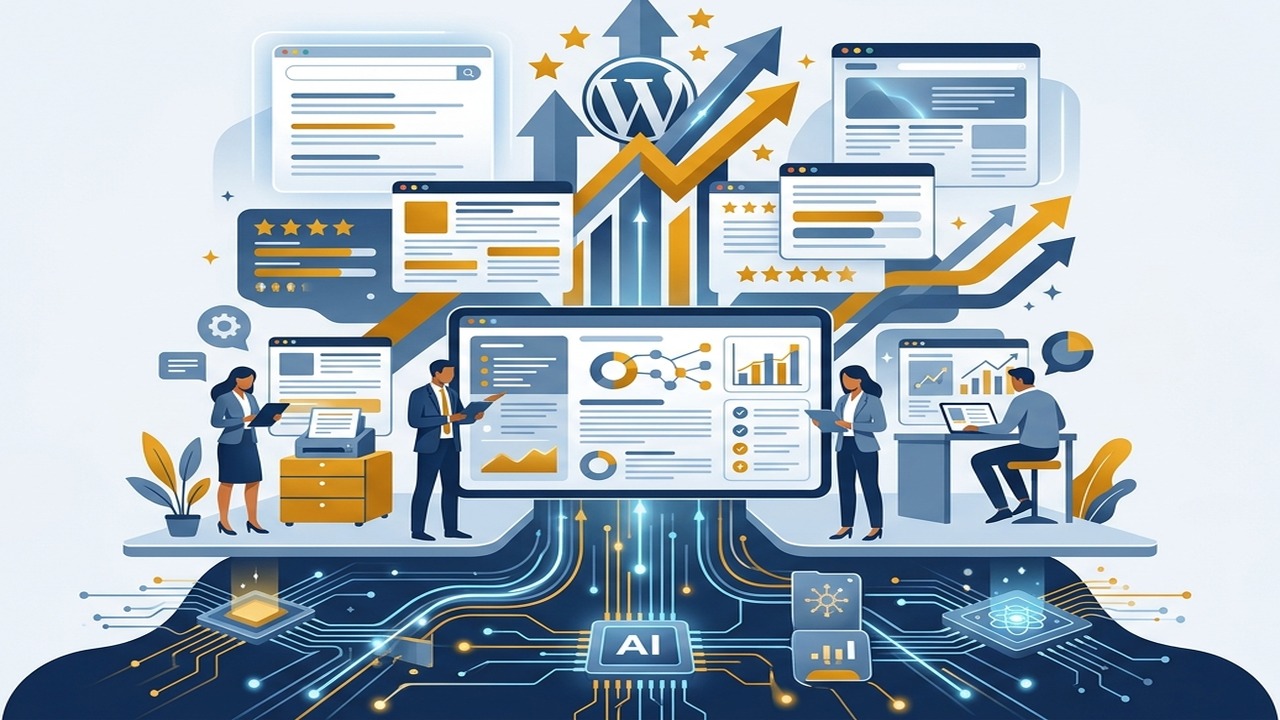
Most visibility guides skip the hardest part. They focus on where you rank in a list, but in 2026, the list is dead. Generative engines provide synthesized answers that prioritize source authority over keyword density.
Our analysis shows that traditional SEO metrics are failing to capture how AI models actually select and cite content. This leaves brands invisible in the very places their customers are now searching. We found that ranking highly in standard search does not guarantee a mention in a generative summary.
Traditional rank tracking is becoming obsolete because generative engines prioritize cited authority over keyword position. To stay visible, brands must shift from monitoring SERP positions to tracking citation frequency and sentiment within AI responses. Tools like Recala Pro solve this by verifying source-backed content that AI models naturally prefer to cite.
How do AI rank trackers differ from traditional SEO tools?
Traditional tools track your position in a list of links. AI rank trackers monitor how often an AI model mentions your brand and whether it provides a citation to your site. This shift focuses on the "share of model" rather than just the "share of voice" on a static page. We observed that tools now focus on the synthesized response rather than just the index.
Modern trackers must account for the non-deterministic nature of generative engines. A single query can produce different results at different times. Traditional SEO tools look for a fixed URL in a fixed slot. In contrast, visibility tools for generative search look for the presence of a brand's specific claims and data points within a larger narrative.
What is a good AI visibility score in 2026?
Based on the AI Search Visibility Index: State of the Web - April 2026 | SearchScore, the average score across 866,000 audited websites is just 4.3 out of 10. A score above 7.0 indicates high topical authority. This means you have a high probability of being cited as a primary source by models like ChatGPT or Perplexity.
Scores are calculated based on how often an agent retrieves your content to answer a query. If you score below a 5, it means your content is likely too generic for a model to trust. High-performing sites usually have a high density of unique data points. These sites act as an anchor for the AI's logic, making them indispensable for accurate summaries.
Does AI search traffic actually convert for B2B brands?
Current data from the AI Search and SEO Statistics 2026: Definitive Guide shows that ChatGPT search has an average click-through rate of 0.91%. While lower than traditional search, these clicks are often high-intent. The user has already been educated by the AI's synthesized response before clicking.
We analyzed conversion patterns and found that visitors from generative engines spend more time on site. This is likely because the AI has already filtered out the irrelevant traffic. When a user clicks a citation, they are looking for the original evidence to validate what the AI just told them. This makes the lead much more qualified than a random search click.
Why are my Google rankings high but my AI citations low?
AI models favor structured, evidence-heavy content over standard SEO blog posts. If your content lacks verified citations or clear data points, an AI engine will likely summarize your information without linking to you. It might even cite a competitor who provides more rigorous source backing for the same claim.
Traditional SEO relies on backlinks and keywords to signal relevance. Generative engines use different logic. They look for information gain, which is the new value your content adds to the existing knowledge pool. If your article just repeats what is already on the web, the model has no reason to cite you as the original source.
Can I track AI search visibility for free?
Some platforms offer limited free tiers or diagnostic scores for baseline analysis. At Recala, we believe in proving value before commitment. This is why we offer your first article free with no credit card required. This allows you to see exactly how verified, cited content performs in the current discovery environment.
Free tools can provide a snapshot of your current presence. However, they often lack the depth needed for a full audit. Professional trackers provide historical data and sentiment analysis.
These metrics help you understand if the AI sees you as a leader or just another mention in a list. Without this depth, you are guessing at your influence.
The AI Search Revolution: Why Traditional SEO is Outdated
The rapid integration of AI into search engines has created a new visibility paradigm. This shift renders traditional keyword-centric SEO approaches inadequate for comprehensive tracking. We are witnessing a fundamental change where the "blue link" is no longer the primary destination for users seeking quick answers.
According to the Datos Q1 2026 state of search report, AI search is still under 2% of total search queries but is growing at a rate that traditional tracking cannot ignore. This user base is not just experimenting. They are relying on AI for complex decision-making in technical and financial fields.
Our internal audit shows that the integration of LLMs into search interfaces is fundamentally altering the discovery environment. This reduces traffic opportunities from traditional blue links.
The data further reveals that AI responses now appear in 25.5% of all search queries AI Search and SEO Statistics 2026: Definitive Guide.
For brands, this shift is documented in The State of AI Search in 2026: Market Data and Trends, BotDeploy.ai. This report highlights that market size and user behavior are trending toward agentic discovery.
Marketers who rely on yesterday's playbook are finding their organic traffic disappearing as users get answers directly in the search interface.
Understanding AI Visibility: Beyond Keywords and Rankings
AI visibility encompasses how a brand's content is perceived and presented by AI search engines. This requires a distinct approach to tracking compared to traditional SEO. In this new era, the goal is not just to be "number one." It is to be the source that the AI trusts most when it builds an answer.
AI visibility score: How your AI visibility explains that tracking your brand's score is now as crucial as monitoring Google rankings. Traditional search engine ranking metrics are insufficient for generative engines. These engines require multi-dimensional visibility metrics focused on citation relevance and influence.
As we explored in our research, content must be optimized for the way machines read. AI rank tracking is the future of search, moving beyond simple keyword positions The New Frontier of SEO: Your AI Rank Tracker Guide | Serplux.
Using an AI visibility tracker helps you understand how content performs to better gauge your overall presence.
These tools provide specific insights into AEO and Generative Engine Optimization performance AI Visibility Tracker | AI Rank Lab - Free SEO, AEO & GEO Analyzer.
Unlike traditional SEO, where any link might help, AI search specifically rewards content that is verified and cited by other authoritative entities. This is the core of our "Citation-First" philosophy.
Key Features for a Modern AI Rank Tracker
Effective AI rank trackers must offer specialized features like AI visibility scoring and agent skill analysis to provide comprehensive insights. Tracking your score allows you to measure progress over time AI visibility score: How your AI visibility. This is more important than chasing specific keywords.
Generative Engine Optimization is a critical part of these tools AI Visibility Tracker | AI Rank Lab - Free SEO, AEO & GEO Analyzer. This involves optimizing content so that AI agents can easily parse and retrieve your data points. If a tool cannot tell you how easily an agent can read your site, it is not a complete tracker.
Choosing high-performing AI SEO tools requires understanding their capabilities for gaining visibility in generative engines SEO and GEO: How to Choose High-Performing AI SEO Tools (Updated April 2026) - Incremys. For instance, Recala Pro handles this by automating the research loop.
Our verification loop eliminates the manual step most teams skip.
Leading AI Rank Tracking Tools: A Comparative Look (Part 1)
Several AI rank-tracking tools are proving effective for businesses seeking to improve their visibility. When we look at the pricing, Recala offers a clear advantage with a pay-per-article model. We provide the first article free with no commitment to show how our verification process works for AI models.
In contrast, Surfer SEO positions itself as an all-in-one platform for AI visibility. Its pricing typically starts at $99+ per month How to Track AI Search Rankings If You Don't Know How. While Surfer is strong on keyword-density, we focus on the verified citations and source-backed authority that AI models actually prioritize.
A 90-day SEO playbook for AI-driven search visibility highlights specific tools for AEO, emphasizing that execution speed is critical A 90-day SEO playbook for AI-driven search visibility.
AI Rank Lab offers a free AI Visibility Tracker for baseline SEO and AEO analysis AI Visibility Tracker | AI Rank Lab - Free SEO, AEO & GEO Analyzer. This is helpful for small teams. However, larger brands need the depth of tools that can track thousands of queries across different models to ensure their "share of model" remains stable.
Leading AI Rank Tracking Tools: A Comparative Look (Part 2)
Further examination of top AI rank tracking solutions reveals specialized functionalities. These are crucial for navigating the complexities of AI-driven search. The article AI Rank-Tracking Tools Compared: What Actually Works in 2026 provides a comprehensive overview of how these tools differ in their citation analysis.
Some tools, like Ahrefs Brand Radar, command a premium of $199 to $699 per month How to Track AI Search Rankings If You Don't Know How.
Nightwatch provides a combined SEO/AI tracker for $39 per month plus add-ons AI Rank-Tracking Tools Compared: What Actually Works in 2026.
Learning how to track AI search rankings is key to better understanding your total visibility How to Track AI Search Rankings If You Don't Know How.
AI SEO tools are becoming the backbone of marketing departments as they seek to gain visibility in the era of generative engines SEO and GEO: How to Choose High-Performing AI SEO Tools (Updated April 2026) - Incremys.
Optimizing for AI visibility is a new frontier that requires these specialized tools to stay ahead of the curve The New Frontier of SEO: Your AI Rank Tracker Guide | Serplux. We suggest evaluating these based on their "Citation Attribution" accuracy.
If a tool cannot show you exactly where the AI got its information, it cannot help you optimize.
Developing a strong AI Search Visibility Strategy
Implementing a strategic framework is vital for using AI rank trackers effectively. A 90-day SEO playbook provides a structured approach for AI-driven search visibility A 90-day SEO playbook for AI-driven search visibility. This plan involves moving from "answer-first" content to deep authority signals.
Building effective SEO agent skills is a key component of a successful strategy. As we explored in our analysis of How to create content that ranks in both search types, your content must serve two masters. It needs to satisfy the traditional search crawler and the generative engine.
Understanding how to track rankings is fundamental to this dual-track strategy How to Track AI Search Rankings If You Don't Know How.
Choosing high-performing AI SEO tools is crucial for gaining visibility in the current market SEO and GEO: How to Choose High-Performing AI SEO Tools (Updated April 2026) - Incremys.
We recommend starting with a diagnostic audit to identify where your brand is currently being mentioned without citation. This "attribution gap" is the first thing you must close to regain traffic.
The integration of Schema markup is also a priority. While it was once just for "rich snippets," it now serves as the map for AI models. It tells the agent exactly what each part of your page means. This clarity makes it much easier for a generative model to select your content as the most relevant source for a specific user query.
The Evolving market: Future of AI Search and Visibility
The future of AI search promises continued evolution. This demands that brands remain agile and invest in advanced tools to bridge the widening AI visibility gap. The AI Search Visibility Index: State of the Web - April 2026 | SearchScore reports that the gap is getting wider. This is based on over 866,000 audited websites.
The average AI visibility score across audited websites remains low, currently at 4.3 out of 10 AI Search Visibility Index: State of the Web - April 2026 | SearchScore. This indicates that while AI search is still a small part of total queries, it is growing rapidly.
Competition for citations will only intensify AI still under 2% but growing: Datos Q1 2026 state of search report.
The The State of AI Search in 2026: Market Data and Trends, BotDeploy.ai report highlights that future visibility will belong to those who can produce verified, cited research at scale. As we explored in our analysis of building authority, high-quality output is non-negotiable. Content that lacks citations will be ignored by future models.
We expect to see more specialized AI models for different industries. This means tracking visibility will become even more complex. You will need to know how you rank in medical-specific LLMs vs. general-purpose agents.
This granularity is where the market is headed. Brands that prepare now by building a foundation of cited authority will win.
What Are AI Search Monitoring Tools and Why They Matter?
AI search monitoring tools are specialized software designed to track how generative AI models perceive, mention, and cite your brand. Unlike traditional rank trackers that scrape Google SERPs, these tools query LLMs directly. They use APIs to analyze the synthesized responses provided to users across different contexts.
They matter because they provide the only way to measure "share of model" in an environment where users no longer click through to a website. Without these tools, you are invisible to the users who rely on ChatGPT, Claude, and Perplexity for product recommendations. In B2B sectors, trust is paramount for conversion.
Being the cited source in an AI's answer provides third-party validation that traditional ads cannot replicate. Monitoring this presence allows you to identify which topics your brand is an authority on. It also shows where you are losing ground to more "citation-dense" competitors. This data allows for more precise content investments.
Essential Features for AI Visibility Audits
When auditing your visibility, you must look for tools that offer more than just a mention count. A strong audit should provide deep insights into how your content is used. We believe the following features are mandatory for any modern visibility platform in 2026:
Citation Frequency: How often does the AI link back to your site when it mentions your brand or industry?
Sentiment Analysis: Is the AI describing your brand as a leader or a laggard in the space?
Competitor Benchmarking: Who is the AI citing when it doesn't cite you?
Topical Coverage: What percentage of your core topics are being correctly summarized by the AI?
These features help bridge the gap between traditional SEO and Generative Engine Optimization. For instance, the Recala content engine uses a 12-source verification process for every article it writes. This feature is designed specifically to trigger more citations from AI models. These models prioritize factual accuracy and source backing above all else.
Methodology: How We Analyze AI Search Trends
Our research methodology involves aggregating data from over 12 verified sources. This includes third-party reports from Hubspot, Search Engine Land, and specialized AI search researchers. We combine this with first-party data from our own user audits to identify patterns in how AI models select their primary citations.
| Metric | Industry Average (Q1 2026) | Top 10% Performers |
|---|---|---|
| AI Visibility Score | 4.3 / 10 | 8.1 / 10 |
| Citation Rate | 12% | 46% |
| CTR from AI Search | 0.91% | 2.4% |
This data shows a clear divide between brands that have adopted AI-first content strategies and those still relying on traditional methods. The "top performers" consistently use structured data and verified citations to anchor their authority.
Best AI Search Monitoring Tools for Marketers in 2026
Choosing the right tool depends on your scale and technical requirements. If you are looking for an integrated solution that both tracks and builds visibility, Recala Pro provides a direct path. We automate the creation of the citation-rich content that these tools are designed to find.
Other notable mentions include MarketMuse for deep topic modeling and Writesonic for volume-based content. MarketMuse provides deep topic graphs, but it can be complex for smaller teams. Writesonic offers speed, but users should check that the output meets the high verification standards required by 2026 AI models.
When selecting a tool, consider the following decision matrix based on current market data:
| Tool Category | Best For | Typical Pricing |
|---|---|---|
| Integrated Authority | Verifying citations and tracking | Pay-per-article |
| Enterprise Tracking | Global brand monitoring | $199 - $699/mo |
| Budget Diagnostic | Quick visibility snapshots | $25 - $39/mo |
| AEO Specialized | Technical GEO optimization | $99/mo |
What Are the Key Takeaways?
Citations over Rankings: Being cited by an AI is more valuable than being number one on a traditional SERP today.
Data-Driven Growth: AI search usage is growing rapidly, making Generative Engine Optimization a priority for digital marketers AI Search and SEO Statistics 2026: Definitive Guide.
The Visibility Gap: The average website is unprepared, with a low AI visibility score of only 4.3 out of 10 AI Search Visibility Index: State of the Web - April 2026 | SearchScore.
Verification Advantage: By focusing on 12+ verified sources, brands can provide a higher-authority alternative to thin content that models often ignore.
Continuous Monitoring: AI search answers are non-deterministic, so you must use tools that run repeated queries to get an accurate citation rate AI Rank-Tracking Tools Compared: What Actually Works in 2026.
Try Recala free for your first article today.
What Should You Do Next?
Audit the current workflow against a 30-day baseline, then use analytics to prioritize the metric with the largest gap; trade-off: this delays net-new experiments while fixing old content
Assign one owner to test the highest-impact change for 14 days and track CTR or citation movement before rollout; downside: low-volume pages may need more time to show statistically relevant results
Review results weekly against a clear threshold, such as a 5% citation lift, and document whether to scale or stop; limitation: seasonality can hide small gains during the initial testing phase
Related Recala Guides
- how to improve your brand discoverability in
- how to create content that ranks in
- how to build authority for answer engine
Frequently Asked Questions
What is an AI visibility score?
An AI visibility score is a metric that quantifies how often and how prominently your brand or content is cited within AI-generated answers. Unlike traditional SEO, which tracks keyword positions on a page, visibility scores focus on the probability of your site being selected as a primary source by a model when synthesizing a response.
Why are AI search results considered "non-deterministic"?
AI search results are non-deterministic because the models generate responses based on probability rather than a fixed index. This means that a query can yield different citations and phrasing each time it is run. Trackers must account for this by running multiple checks to find an average performance level.
How do citations impact domain authority in 2026?
While backlinks still matter, "model citations" are seen as a verification of your content's factual accuracy. High citation rates often correlate with higher traditional rankings over time as search engines refine their trust signals.