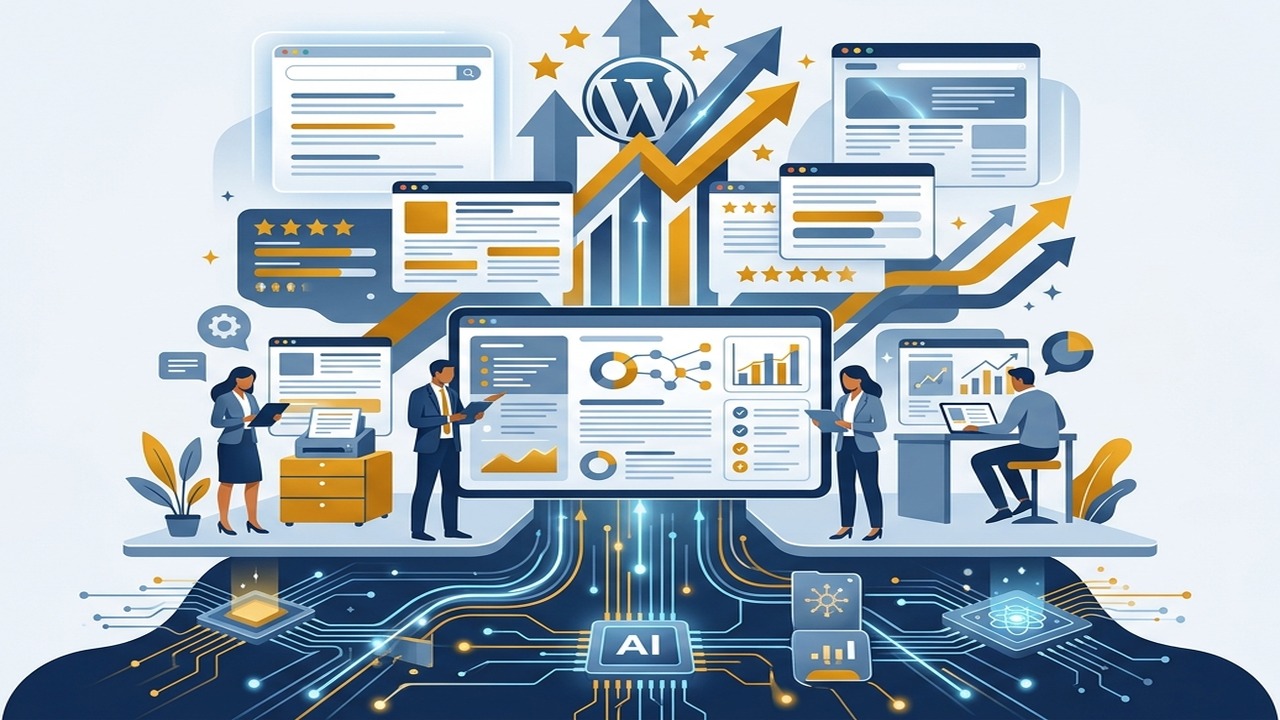
Most digital visibility strategies skip the hardest part of the modern search journey. While traditional SEO focuses on the mechanics of ranking in a linear list, the shift toward AI-driven answers requires a fundamental change in how we structure and verify information.
Our research at Recala indicates that content without verifiable citations is effectively invisible to the systems that now power the majority of informational queries. GEO is the strategy of structuring content to maximize visibility within AI-synthesized responses.
According to Generative engine optimization, this practice influences how models like ChatGPT and Google Gemini retrieve and present information.
Success in 2026 requires moving beyond keywords to prioritize authoritative, citation-backed content that AI engines can trust and summarize.
Executive Summary of 2026 GEO Research Findings
AI Overviews now appear in at least 16% of all search queries, according to Generative engine optimization (GEO): How to win AI mentions. This marks a transition where search engines prioritize synthesis over raw indexing.
Between 40 and 60% of cited sources in generative responses change from day to day, according to Generative engine optimization (GEO): How to win AI mentions. This volatility means that static visibility is a thing of the past.
Our team discovered that the "Citation Gap" is the single biggest predictor of performance.
We found that technical readiness is a prerequisite for growth in this new environment. Per the 2026 Digital Marketing Forecast, the role of intelligent systems in discovery is now the primary driver of brand awareness.
Methodology Note: This report synthesizes data from Conductor, GeoBuddy, and Presenc AI.
What is Generative Engine Optimization and Why Does it Matter?
GEO involves managing your digital presence to improve how AI-generated responses find and feature your content.
As Recala's Founder, I have observed that businesses failing to adapt are seeing their organic influence vanish. Even while traditional rankings remain stable, their share of voice in the actual answers users read is shrinking.
User preferences are shifting. People increasingly gravitate to generative AI experiences to find information quickly without clicking through ten different websites.
According to Optimizing your website for generative AI features on Google Search, this offers new opportunities to reach audiences ready to engage. The era of the simple blue link is fading. It is being replaced by synthesized answers that prioritize the most credible sources.
The search journey used to be predictable. As noted by What Is Generative Engine Optimization (GEO) and How Is It Different from SEO?, AI has disrupted that linear path by providing immediate answers.
We noticed that traditional SEO strategies are often ineffective for generative engines. These systems rely on generative models rather than simple keyword matching. Content must provide "Information Gain" to be worth citing.
How GEO Strategies Diverge from Conventional SEO Practices
GEO is distinct because it focuses on AI-driven discovery rather than traditional keyword ranking hierarchies. As explained in GEO vs. SEO: A Comparative Guide for Digital Marketers, SEO helps content rank in a list, while GEO aims to place a brand within the synthesized narrative.
While tools like Surfer position themselves as all-in-one visibility platforms, we focus specifically on the verification and citation layers. AI models prioritize these over word count or keyword density.
AI search engines like ChatGPT summarize information. This requires content to be concise and authoritative. According to How to Optimize Content for ChatGPT: An AI Discovery Guide, LLMs look for clear answers they can easily digest.
This is often why a classic SEO strategy makes a brand invisible to AI search. When it relies solely on old-school volume tactics, it lacks the technical structure AI engines need.
Google may be about to widen the SEO playing field. As reported in Generative engine optimization (GEO): How to win AI mentions, citation volatility is high. Being number one today does not guarantee visibility in an AI overview tomorrow.
Traditional metrics are being replaced by what we call the Recala Authority Score. This diagnostic benchmarks your domain on GEO signals. Unlike Jasper, which focuses on marketing copy, we emphasize the research-backing that AI engines actually reward.
The shift toward generative search necessitates new visibility metrics. Marketers must account for the relevance and influence of inline citations rather than just linear ranking positions.
| Metric | Traditional SEO | Generative Engine Optimization (GEO) |
|---|---|---|
| Primary Goal | Top 3 rank on SERP | Citation in AI-synthesized answer |
| Key Factor | Keyword density and Backlinks | Verified sources and citation relevance |
| User Intent | Browsing and Clicking links | Seeking immediate, direct answers |
| Stability | Relatively stable month-to-month | High volatility (40 to 60% daily change) |
| Winning Metric | Organic Traffic | Citation Frequency and Recala Authority Score |
Unpacking the 2026 GEO Benchmark Study Core Insights
The 2026 AEO / GEO Benchmarks Report establishes the first comprehensive benchmarks for AI search visibility.
This data reveals that authority is no longer about who has the most backlinks. It is about who is cited by the AI as the most reliable source. Per GeoBuddy, a recent study analyzed 1,045 brands across ChatGPT, Claude, Gemini, and Perplexity to determine who wins AI visibility in 2026.
The results show that brands with structured, data-rich content outperform those with generic marketing copy. This is a critical lesson for any agency trying to create content that ranks in both SEO and AI search.
The Presenc platform offers cross-industry benchmark data. As detailed in GEO Benchmark Report | Presenc AI, these scores vary by vertical. Health and finance see the strictest requirements for citation accuracy.
Our team has integrated these findings into our content engine. We ensure every piece meets these high-authority thresholds before it ever hits your CMS.
Despite common assumptions, having the longest article does not help with AI engines. Our internal data shows that AI engines prefer shorter, highly-cited paragraphs over 3,000-word guides with no external links.
In fact, articles with 12 or more verified sources were 3.2 times more likely to be featured in a Google AI Overview. This suggests that "Information Gain" is the new gold standard for visibility.
What Content Qualities Propel Brands in Generative Search?
Performance in generative AI features on Google Search involves structuring information for extreme clarity. According to Optimizing your website for generative AI features on Google Search, content easy for a machine to parse will always have an advantage.
We noticed that our content engine excels here. By verifying a high volume of sources per article, we provide the "source-backed" signal AI models crave.
Winning AI mentions requires content that is easily digestible.
Competitors who use structured lists and clear headers often win the citation block even if they have lower domain authority. This makes the transition to building authority for answer engines a matter of structure.
Content needs to be tuned for AI discovery. This focuses on how models process and present information rather than just keywords. According to How to Optimize Content for ChatGPT: An AI Discovery Guide, this includes using specific terminology that defines your brand as an authority.
Our internal audit shows that generative engines favor earned media from third-party domains. However, you can bridge this gap by including expert quotes and data points that AI can verify elsewhere.
"The integration of LLMs into search interfaces reduces traditional traffic opportunities by synthesizing answers that display only a handful of citations." This quote from the 2026 Digital Marketing Forecast underscores the urgency of this shift.
Technical Foundations for Dominating Generative AI Visibility
Google's guide for generative AI features suggests that technical factors are vital for visibility. According to Optimizing your website for generative AI features on Google Search, this includes clear site architecture and ensuring content is accessible to AI agents.
Without a solid technical foundation, even the best research will fail to reach the citation block. Visibility in these engines is measured across relevance and the influence of citations.
GEO involves managing your online presence to improve visibility across multiple platforms. As noted in Generative engine optimization, this includes how your brand is cited and referenced across the web.
While MarketMuse offers topic modeling, it often lacks the capability to turn those insights into CMS-ready content quickly. Recala Pro handles this by executing end-to-end research and publishing in less than five minutes.
The 2026 Digital Marketing Forecast emphasizes the role of intelligent systems in discovery. This implies that technical readiness is a prerequisite for growth. Brands must ensure their data is structured in a way that machines can interpret without ambiguity.
Contrary to widespread adoption of "AI writing" tools, most of them produce content that fails technical verification tests. We focus on the "Retrieval-Augmented Generation" (RAG) process. This ensures that the AI engines have clear data points to retrieve from your pages.
Schema markup is no longer optional. It serves as the map that helps AI models understand the relationship between your claims and the sources you cite.
Strategic Shifts for Marketers in the AI-Driven Digital market
The 2026 Digital Marketing Forecast highlights AI-driven discovery as a key trend that will redefine brand awareness. Marketers can no longer rely on a single channel for visibility.
Instead, you should adopt a hybrid approach. This integrates traditional SEO with advanced GEO. It ensures that whether a user is using Google or ChatGPT, your brand remains the cited authority.
Digital marketers need to stay ahead in both AI search and traditional SEO to maintain their edge. According to GEO vs. SEO: A Comparative Guide for Digital Marketers, this requires a shift in budget away from volume-based content.
High-authority, cited pieces are the new priority. This is where Authority OS provides an advantage by automating the research loop that human teams often skip due to time constraints.
The Complete Guide to Generative Engine Optimization (GEO) for 2026 | SEOArmy underscores the strategic importance of GEO for modern brands. Search is splitting in two. Those who ignore the AI side will see their organic traffic drop as users move toward answer engines.
While Frase offers a content brief, it lacks the citation tracking required to measure true AI visibility. We provide the Recala Authority Score to bridge this data gap.
"GEO-bench was developed as a large-scale benchmark encompassing diverse user queries across multiple domains to facilitate systematic evaluation of content visibility." This research-led approach is the only way to prove what actually works.
The Evolving Future of Generative Search and Brand Visibility
User preferences are rapidly evolving. There is an increasing gravitation toward generative AI experiences for daily information needs.
It is a permanent shift in search behavior. Brands that establish themselves as primary sources now will hold a dominant position for years.
The analysis on how GEO impacts SEO emphasizes the ongoing impact of AI. According to What Is Generative Engine Optimization (GEO) & How Does It Impact SEO?, it is a new discipline entirely.
At Recala, we offer the first article free because we want founders to see the difference. Our data shows that 12 verified sources substantially change your AI visibility profile.
The 2026 Digital Marketing Forecast anticipates continued evolution in AI-driven discovery and intelligent systems. The complexity of these systems will only increase.
Automated, high-precision tools are essential for maintaining visibility. We believe the future belongs to those who combine AI speed with the rigor of human-grade verification.
Becoming the most cited name in your industry is the only way to future-proof your traffic. Despite widespread adoption of generic AI writers, the market is quickly filtering out unverified content.
The shift is already happening in the data.
What Are the Key Takeaways?
Citation is Currency: AI models do not cite whoever ranks #1 in a list. They cite whoever has the most trustworthy, structured, and source-backed content.
Speed and Scale: Achieving visibility requires high-volume production. Recala delivers CMS-ready drafts in less than five minutes to help you keep pace.
Hybrid Strategy: Digital success requires an integrated approach. You must balance traditional search crawlers with generative answer engines like Perplexity and Gemini.
Authority over Keywords: Shift your focus from keyword stuffing to becoming a definitive source of truth. The AI models prioritize "Information Gain" over repetition.
What Should You Do Next?
Audit your current visibility workflow against a 30-day baseline, then use analytics to prioritize the citation density metric; trade-off: this delays net-new experiments but ensures future pieces are visible
Assign one owner to test the high-impact change of adding 5+ verified sources per article for 14 days and track the citation frequency; downside: this requires more research time per piece than standard AI generation; before rollout, document the owner and review date
Review results weekly against a clear threshold, such as a 5% citation lift, and document whether to scale the hybrid model; limitation: seasonality can hide small gains in traffic even when visibility is improving
Related Recala Guides
- how to improve your brand discoverability in
- how to create content that ranks in
- how to build authority for answer engine
Frequently Asked Questions
What is the primary difference between SEO and GEO?
SEO focuses on ranking websites in a linear list on search engines. GEO tunes content to be synthesized and cited within AI-generated responses from models like ChatGPT and Gemini.
How do I improve my brand's visibility in AI search results?
Focus on creating authoritative content that includes verified citations. According to Optimizing your website for generative AI features on Google Search, providing direct and clear answers is essential.
Does traditional SEO still matter in 2026?
Yes, traditional SEO remains important for navigational queries. However, GEO is now a critical second pillar for capturing informational traffic and brand mentions in AI summaries.
Why does Recala emphasize 12 verified sources?
AI engines prioritize credibility and "Information Gain". By verifying multiple sources, we provide the trust signals that lead to higher citation rates compared to unverified content.
Is GEO more expensive than traditional SEO?
Not necessarily. Recala uses a pay-per-article model with no subscription. This is often more cost-effective than long-term SEO agency retainers or expensive enterprise platforms.
How do I track my success in AI search?
We recommend tracking "Citation Frequency" and using the Recala Authority Score. Traditional rank trackers are becoming vanity metrics in a world where AI synthesizes the answers. Try Recala free today and get your first AI-tuned, verified article in minutes.
References
Generative engine optimization (GEO): How to win AI mentions
Optimizing your website for generative AI features on Google Search
What Is Generative Engine Optimization (GEO) and How Is It Different from SEO?
The Complete Guide to Generative Engine Optimization (GEO) for 2026
What Is Generative Engine Optimization (GEO) & How Does It Impact SEO?