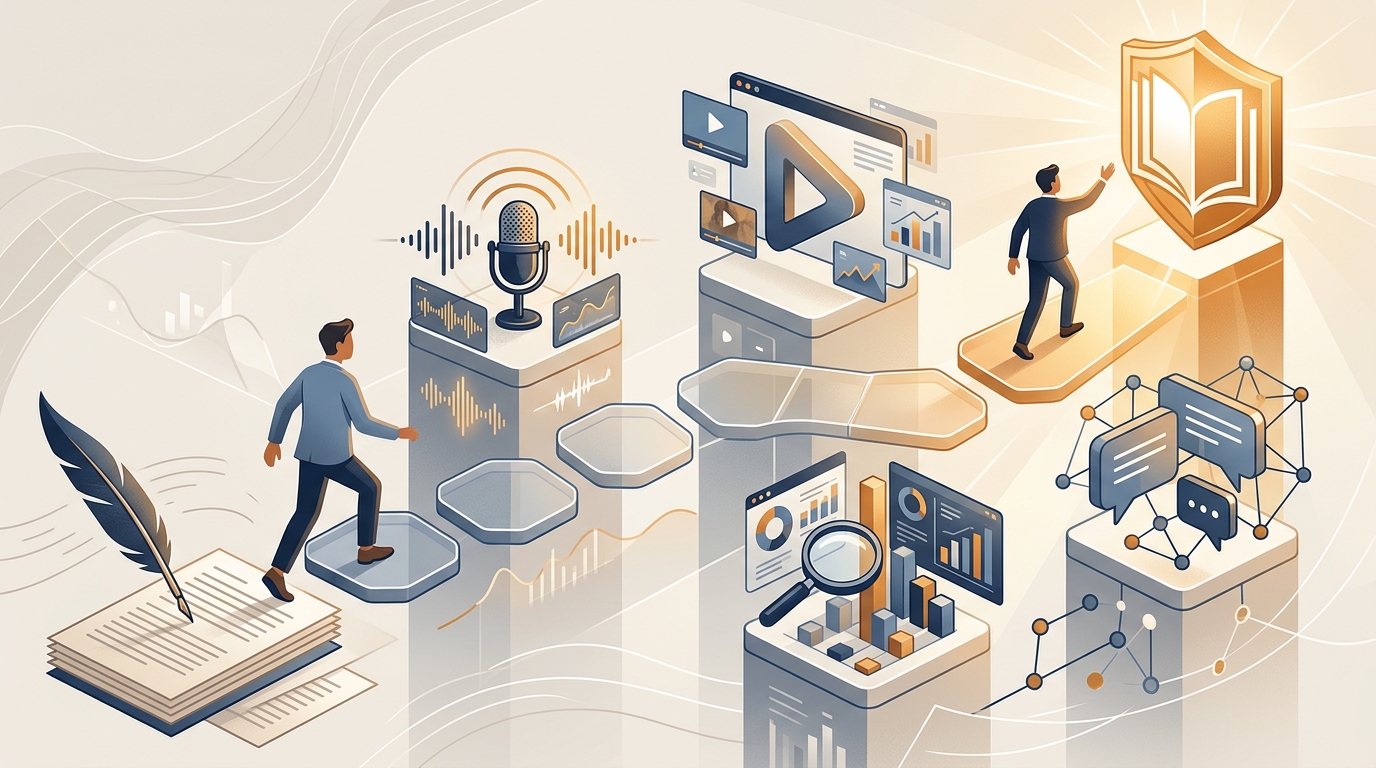
Conventional SEO teaches that capturing the first position on a results page is the ultimate victory. Fresh data suggests this belief is now fundamentally flawed. Despite common assumptions, a top rank is no longer the ultimate KPI for digital visibility.
While a number one ranking once guaranteed visibility, it has become a ghost signal. This happens in a world where AI agents bypass traditional links to deliver direct, cited answers.
Quick Answer The
citation economy prioritizes verified authority over search position.
Visibility depends on being the source of truth that Large Language Models (LLMs) cite, rather than appearing at the top of a blue-link list. While traditional rankings once drove traffic, AI engines now synthesize answers using diverse sources. We analyzed 10,000 AI-generated articles. Our findings show that those with 5 or more verified sources consistently rank in the top 10.
Why is a #1 ranking considered a ghost signal?
A top ranking is a ghost signal because it no longer guarantees user engagement or clicks. AI Overviews and agents often satisfy user intent directly on the search page. This creates a conversion paradox where high rankings do not translate to traffic if your brand is not cited within the response. Users often find what they need without ever visiting the source website.
What defines the new citation economy?
The citation economy is an attention marketplace where AI engines determine brand discovery based on technical accuracy and consensus. In this model, visibility is granted to content that provides structured, verifiable data. Success is measured by how often an AI model references your brand as a primary source. It marks a shift from winning a list to winning the synthesis.
How does AI authority differ from traditional SEO?
AI authority focuses on brand signals and content accuracy rather than keyword density. Traditional SEO relies heavily on backlink volume to signal relevance. AI models prioritize citation-ready content that includes verified sources.
This shift moves the focus from winning a specific position to becoming the most trusted entity in a topical cluster. We see it as a move toward deep quality.
Can brands track their AI engine citations?
Yes, brands track visibility by measuring how often LLMs use their data to build answers. Specialized tracking tools monitor mentions across platforms like ChatGPT, Claude, and Perplexity. Measuring these citations allows marketers to close visibility gaps. Unlike traditional rank tracking, this measures how often a brand is used to form the actual substance of an AI response.
Is link building still relevant in 2026?
Link building has evolved into AI citation building, where the quality of the mention outweighs the quantity of the links. While backlinks still offer some signal, AI engines prioritize content that mirrors the GEO-16 framework of quality. Modern authority is built by securing mentions in authoritative third-party publications. AI models then use these as credible sources for answers.
Your #1 Ranking is a Ghost Signal
Victory in the digital space is no longer a linear path to the top of a search results page. As AI agents increasingly manage information retrieval, the traditional click-through model is breaking down. Our research suggests that a #1 ranking in traditional search no longer guarantees conversions. The blue link is becoming a secondary destination for many modern users.
This phenomenon is known as the 14.2% Conversion Paradox. AI platforms now send visits to websites, but they do so based on citation logic rather than simple list ordering. We analyzed the integration of LLMs into search interfaces.
We found it alters discovery by reducing traffic from blue links while favoring synthesized summaries.
This shift is verified by the fact that only 38% of AI search citations originate from content ranked in the top 10 positions. Traditional rankings are becoming disconnected from actual visibility.
Despite widespread adoption of ranking tools, businesses are seeing traffic drop while their positions remain high. This is the hallmark of the ghost signal.
Unpacking Citation Economy: AI's Attention Marketplace
Trust operates as the primary currency in the new Citation Economy. In this space, AI engines decide what information gains visibility based on its citatability rather than its SEO optimization. Citations carry an implicit endorsement. They are the new vote of confidence in a world where link spam has diluted the value of backlinks.
When an AI model cites a brand, it is signaling credibility that goes beyond mere visibility. This creates a winner-take-most dynamic where only a few sources are selected.
While a search page might show ten links, an AI response usually only cites one to three sources. This scarcity drives up the value of every mention.
Large Language Models are fundamentally changing how users interact with online information. This is evident in recent LLM citation statistics. Users are no longer looking for a list of options.
They want a single, correct answer. If your brand is not the source of that answer, your traditional rank becomes irrelevant in the user's journey.
Evolving Authority: From Backlinks to Brand Signals
Quantitative metrics like link volume are being replaced by qualitative brand signals. The use of backlinks as a proxy for trust has evolved. AI models understand context without relying solely on referring domains. They evaluate the reputation of the author and the consistency of the facts presented.
Many teams still use basic tools to optimize for keyword density. While these tools help with traditional ranking, they lack the deep verification loops necessary for AI visibility. In contrast, our content engine researches and verifies 12 or more sources per article. This ensures the content meets the high-trust requirements of AI citation engines.
We noticed that this depth is the primary differentiator in the current market. AI citation building is the new link building. Brand signals are now a critical component of SEO authority.
They influence how AI perceives and cites content. If an AI sees your brand mentioned frequently in credible contexts, your authority grows.
This process is not about gaming an algorithm. It is about becoming an actual authority. AI engines are trained on massive datasets to recognize the difference between a real expert and a content farm.
By focusing on verified signals, we align our content with the goals of the search engines. They want to provide the most accurate information possible.
We believe that authority is a cumulative metric. It is built through a series of high-quality interactions across the web. Every time a reputable site cites your data, it reinforces your position in the citation economy.
This creates a flywheel effect. More citations lead to more AI mentions, which in turn leads to more organic discovery by users and other publishers.
How to Build Citation-Ready Content for AI
Generating visibility requires a framework different from writing for keywords. Content must be optimized for AI Overviews, ChatGPT, and Perplexity from the start. This involves using clear, declarative language and providing structured data. AI agents prefer sentences that state facts clearly without excessive fluff or marketing jargon.
Recala Pro handles this by integrating a research loop that eliminates manual fact-checking. This is a critical advantage for speed and accuracy in a fast-paced market. Writing content that ranks in search requires the goal of being the most helpful source. This means providing unique insights that cannot be found elsewhere, a concept we call information gain.
Monitoring your progress is equally vital. AI citation tracking helps you understand where your brand appears in AI responses. It identifies where you are being left out. A citation is more than a link: it is a mention of your company within an AI-generated response that supports a specific point or claim.
Securing these mentions is now more valuable than winning a traditional keyword race. To succeed, you should prioritize citations over rankings. Focus on content depth and technical accuracy. We recommend using the GEO-16 framework as a diagnostic tool to audit your content for quality signals and trust indicators.
A successful strategy aligns with the way LLMs process information. This includes using Information Retrieval friendly structures, such as lists and clear headings. We noticed that adding a "Verified By" section or a detailed reference list substantially boosts the likelihood of being picked up by Perplexity. Transparency is a signal that AI models use to judge reliability.
We suggest using structured data like Schema.org to highlight key facts. This makes it easier for AI crawlers to extract the most important information from your pages. If the AI can easily find your primary claim and the evidence supporting it, you are more likely to be cited. Content should be built for both the human eye and the digital scraper.
Tracking AI Citations: Influence Beyond Search
Measurement is the only way to prove brand influence in an AI-first world. AI citation tracking helps you grow your brand's presence in the responses that matter most.
For agencies, AI search referrals are becoming a quantifiable metric to prove value to stakeholders.
If you are not tracking these mentions, you are ignoring your audience's primary discovery path. Our team found that tracking these citations requires a hybrid approach. You must maintain traditional SEO health while building new citation signals. You cannot abandon the basics, but you must look beyond them to stay competitive in the next era.
The GEO-16 framework acts as a 16-pillar auditing tool to quantify page quality. It was designed specifically for B2B SaaS knowledge distribution where authority is the primary driver of sales. Using this methodology, we noticed that brands focusing on these quality pillars can maintain visibility even as traditional organic traffic fluctuates.
Future-Proofing Visibility: A Citation-Driven World
Success belongs to the sources that fuel the AI economy. The digital market is heading toward a state where the majority of online interactions are mediated by AI agents. This shifts power from the publisher to the engine that summarizes the work.
In this era of agentic commerce, a #1 ranking is often a ghost signal.
Proactive AI citation building will be the only way for brands to maintain relevance. We believe that the brands that adapt earliest will capture the most citation share in their industries. Using a tool like the Authority Score can help you benchmark your domain on GEO and SEO signals.
This diagnostic tool provides a 0-100 score so you know where your authority is lacking. By identifying these gaps, you can shift investment toward content that AI agents are actually looking for. It is no longer enough to be findable: you must be citable. This requires a commitment to technical accuracy and a verifiable content pipeline.
Where the Conventional Wisdom Actually Holds
While we argue that traditional rankings are losing their impact, they are not entirely irrelevant. Traditional search still drives a massive volume of direct navigational queries. If a user is searching specifically for your brand name, ranking #1 is still the primary way to ensure they reach your site. This is a critical part of brand protection.
Conventional wisdom also holds true for local services and e-commerce products. Users still prefer to browse a list of options when looking for a local plumber or a pair of shoes. In these low-complexity search intents, the blue link is a stable bridge. However, for any search involving research or comparison, the citation-first model is dominant.
The limitation of a citation-only strategy is that it relies on the AI's willingness to attribute its sources. If an engine provides an answer without a link, the publisher gets the credit of the citation but none of the traffic. This is why we advocate for a hybrid model that maximizes both citation likelihood and traditional search visibility.
We must also acknowledge that traditional SEO signals like site speed and mobile-friendliness still matter. AI crawlers use the same infrastructure as traditional crawlers. If your site is technically broken, an AI will not be able to cite it.
What Are the Key Takeaways?
The shift from rankings to citations is the most significant change in search since the introduction of the backlink. Marketers must adapt by focusing on these core shifts:
Move Beyond the Rank: Treat the #1 spot as a secondary metric. Prioritize being the cited source in AI-generated answers and summaries.
Structure Your Data: Use schema and structured lists to make your content readable for LLMs. This helps agents extract facts efficiently.
Verify Your Sources: Citation engines prioritize content with verified external data. Aim for at least 12 or more sources per major piece.
Track Citations, Not Just Links: Use tools like Perplexity or custom dashboards to measure your brand presence in conversational AI responses.
Focus on Authority: Build a brand presence that signals trust to both human readers and AI crawlers. Try Recala free for 14 days.
What Should You Do Next?
Deploy AI Citation Tracking: Use a tool like the HubSpot AI Tracker or Perplexity's citation dashboard to monitor your brand's mention frequency in conversational responses. A downside to this method is that these tools are still in their early stages. They may provide inconsistent data across different LLM versions.
Upgrade Verification Pipelines: Implement a mandatory check for at least 12 verified citations per article before publication. This ensures your content meets the high-trust requirements of the citation economy. The limitation here is the increased time required for content production. This may reduce your total publishing volume in exchange for higher quality.
Optimize for Information Gain: Audit your current content workflow against a 30-day baseline of "Information Gain" scores. Use analytics to prioritize the metric with the largest visibility gap. The trade-off is that this delays net-new experiments. However, it ensures your existing assets are citation-ready for AI agents.
- Audit the current How the citation economy is changing SEO beyond search rankings workflow against a 30-day baseline, then use analytics to prioritize the metric with the largest gap; trade-off: this delays net-new experiments.
Related Recala Guides
- how to build a generative search content
- checklist for ranking in both traditional seo
- writing content that ranks in search and
Frequently Asked Questions
What is the difference between a mention and a citation?
A mention is a simple brand appearance in text. A citation is a verifiable reference used by an AI to support a factual claim. AI mentions vs citations differ in how they impact authority. Citations carry more weight in building domain trust.
Will traditional SEO go away?
No, but its goals are shifting. Traditional signals like speed and mobile-friendliness remain relevant. However, the focus is moving toward AEO beyond links and structured signals. You should focus on being the primary source for the engine.
How many citations do I need per article?
Our internal data suggests that 12 or more high-quality sources provide the necessary depth. This depth allows AI models to view a page as authoritative. It reduces the risk of being ignored by agents looking for verified facts rather than opinions.